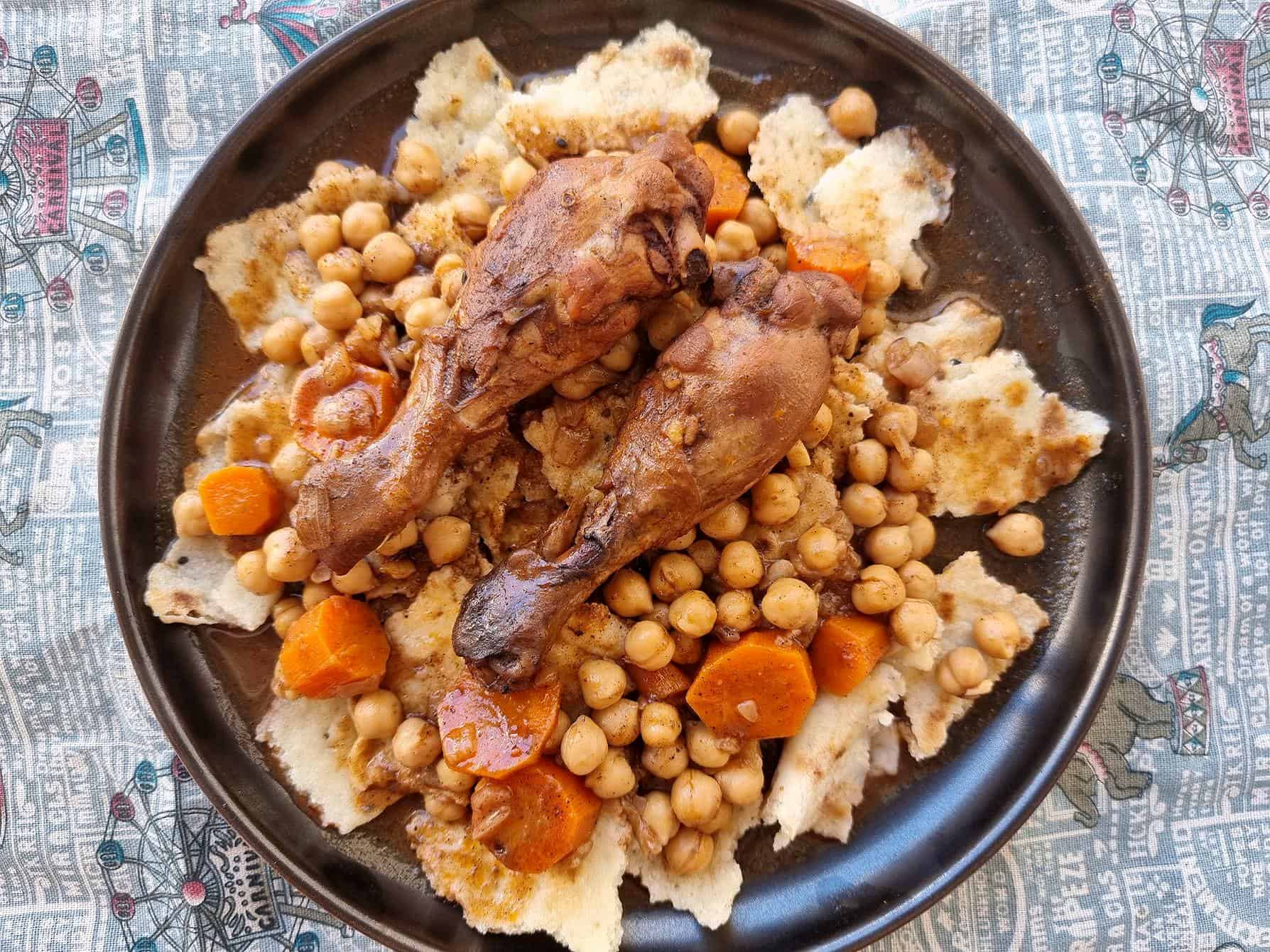
Hand-torn sheets of thin flatbread drenched in a rich, spiced tomato and lamb stew from the Algerian highlands.
Nutrition & Info
Allergen Warnings
Equipment Needed
Presentation Guide
Vessel: deep communal bowl
Garnishes: chickpeas, fresh cilantro
Accompaniments: harissa, lemon wedges
Instructions
-
1
Heat 3 tablespoons of olive oil in a large, heavy-bottomed pot or Dutch oven over medium-high heat until the oil begins to shimmer. Season the lamb cubes with salt and pepper, then sear them in a single layer for 4-5 minutes, turning occasionally, until browned on all sides. The deep caramelization on the meat builds the savory foundation for the stew. Remove the lamb and set aside.
-
2
Reduce the heat to medium and add the diced onions to the same pot, stirring to scrape up any browned bits from the bottom. Cook for 6-8 minutes, stirring occasionally, until the onions become soft and translucent with golden edges. The sweet aroma of the caramelizing onions should fill the kitchen.
-
3
Stir in the tomato paste, pureed tomatoes, turmeric, black pepper, cinnamon, and ras el hanout. Cook the spice-tomato mixture for 3-4 minutes, stirring constantly, until it deepens in color and the raw tomato smell transforms into a rich, fragrant sauce. Return the seared lamb to the pot and add 4 cups of water or stock. Bring to a boil, then reduce heat to low, cover, and simmer gently for 40 minutes until the lamb is nearly fork-tender.
-
4
Add the turnip cubes and drained chickpeas to the simmering stew. Continue cooking uncovered for 15-20 minutes until the turnips are tender when pierced with a knife and the stew has reduced to a thick, luscious consistency that will properly soak into the bread without making it waterlogged.
-
5
While the stew finishes, tear the rougag flatbread sheets by hand into irregular pieces roughly 2-3 inches across. The hand-tearing is traditional and gives the bread varied textures — some pieces will absorb more broth while others retain a slight chew. If using storebought flatbread, lightly warm the sheets in a dry skillet before tearing to make them pliable.
-
6
Divide the torn flatbread pieces among deep serving bowls, creating a generous nest of bread in each. Ladle the hot stew generously over the bread, ensuring the broth thoroughly soaks into every piece of torn flatbread. Top with tender lamb pieces and chickpeas. Garnish with fresh cilantro and serve immediately while the bread is still absorbing the aromatic broth — this is a dish that must be eaten fresh and hot.
Did You Know?
Chakhchoukha originates from Biskra and the Aures mountains and is a staple at Algerian celebrations.
Chef's Notes
Equipment Tips
- large pot
- skillet
- cutting board
- sharp knife
Garnishing
chickpeas, fresh cilantro
Accompaniments
harissa, lemon wedges
The Story Behind Chakhchoukha
The Story: Chakhchoukha is a ceremonial dish from the eastern Algerian city of Biskra and the surrounding Ziban region, where it has been prepared for centuries as a centerpiece of communal celebration. The dish consists of hand-torn sheets of rougag, a thin semolina flatbread, drenched in a rich stew of lamb, chickpeas, tomatoes, and turnips seasoned with ras el hanout. The name is said to derive from the crackling sound the bread makes as it is torn into pieces. Amazigh pastoral communities developed this dish as a way to stretch bread and meat across large gatherings.
On the Calendar: Chakhchoukha is the dish of celebration in eastern Algeria, served at weddings, circumcision ceremonies, religious holidays including Eid al-Adha, and important family milestones. It is rarely prepared for everyday meals due to the labor involved in making rougag by hand.
Then & Now: Traditionally prepared exclusively by experienced women who could produce paper-thin rougag on a heated copper dome, chakhchoukha has gained national recognition as Algeria's culinary diversity receives greater attention. The city of Biskra holds an annual chakhchoukha festival celebrating the dish as regional heritage.
Legacy: Chakhchoukha embodies the Algerian principle that the most honored dishes demand patience, skill, and communal effort, transforming simple ingredients into something extraordinary.
More Algerian Dishes
 Medium
📜 Story
Medium
📜 Story
Bourek
Algerian Stuffed Pastry Rolls
Ramadan iftar, celebrations Medium
📜 Story
Medium
📜 Story
Bradj
Algerian Semolina Date Cake
Snack, Ramadan Hard
📜 Story
Hard
📜 Story
Chakhchoukha Biskria
Biskra-Style Torn Bread in Spiced Sauce
Friday lunch, celebrations Medium
📜 Story
Medium
📜 Story
Chorba
Algerian Spiced Soup
Ramadan iftar
Comments (0)
Log in to leave a comment.
No comments yet. Be the first to share your thoughts!