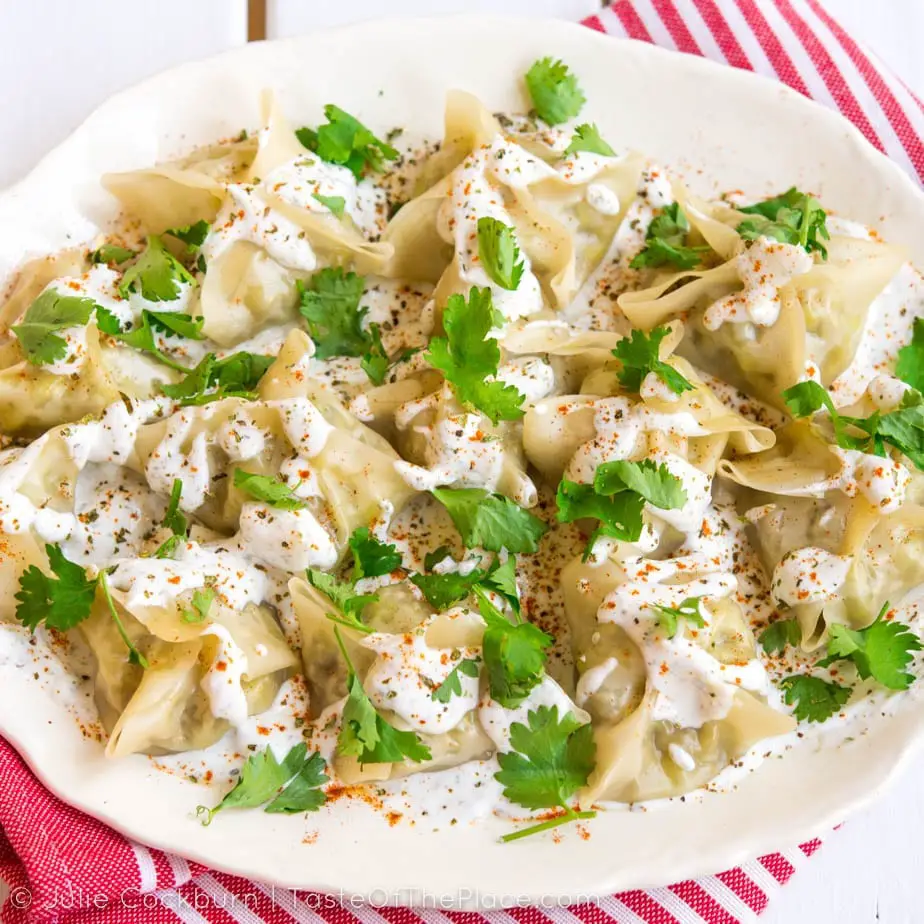
Delicate steamed dumplings filled with spiced beef and onions, crowned with a tangy yogurt-garlic sauce and a rich tomato-lentil topping. Afghanistan's most elegant dish.
Nutrition & Info
Allergen Warnings
Equipment Needed
Presentation Guide
Vessel: deep ceramic plate
Garnishes: dried mint, ground red pepper
Accompaniments: yogurt-garlic sauce, tomato-lentil sauce
Instructions
-
1
Prepare the dough by combining 3 cups of flour and 1 teaspoon of salt in a large bowl. Make a well in the center, add the egg and warm water, and mix until a shaggy dough forms. Turn out onto a floured surface and knead vigorously for 8-10 minutes until the dough is smooth, elastic, and no longer sticky. Wrap tightly in plastic wrap and rest at room temperature for at least 30 minutes.
-
2
For the filling, combine the ground lamb with the very finely diced onions in a large bowl. The onion-to-meat ratio should be nearly equal, which is essential to the authentic Afghan flavor. Add the ground coriander, cumin, black pepper, and salt. Mix thoroughly with your hands until the spices are evenly distributed. The filling should be moist and well-seasoned.
-
3
Roll the rested dough out on a well-floured surface as thin as possible, aiming for about 1-2 millimeters thick. Cut into 3-inch (7-8 cm) squares using a sharp knife or pizza cutter. Place approximately 1 tablespoon of the meat-onion filling in the center of each square. Brush the edges lightly with water, then bring all four corners up to meet at the top and pinch firmly to seal, creating a small purse-shaped dumpling.
-
4
Lightly oil the tiers of a large steamer or bamboo steamer basket. Arrange the dumplings in a single layer with small gaps between them to prevent sticking and allow steam to circulate. Steam over vigorously boiling water for 40-45 minutes until the dough is translucent and cooked through and the meat filling reaches an internal temperature of at least 75°C/165°F.
-
5
While the dumplings steam, prepare the yogurt sauce. Whisk together 2 cups of plain yogurt with the crushed garlic cloves, salt, and 2-3 tablespoons of water until smooth and drizzle-able. The sauce should be thick enough to cling to the dumplings but thin enough to pour. Set aside at room temperature to let the garlic flavor develop.
-
6
For the lentil-tomato sauce, rinse 1 cup of yellow split peas and simmer in 3 cups of water for 25-30 minutes until completely soft and beginning to break down. In a separate pan, heat 2 tablespoons of oil over medium heat, sauté the diced onion for 5 minutes until soft, then stir in the tomato paste and turmeric. Cook for 2 minutes until the paste darkens, then fold in the cooked lentils. Season with salt and simmer for 5 more minutes until thick and saucy.
-
7
To assemble, arrange the steamed dumplings on a large serving platter. Spoon the garlicky yogurt sauce generously over the top, ensuring every dumpling is coated. Ladle the warm lentil-tomato sauce over the yogurt layer. Finish with a generous sprinkle of dried mint and a drizzle of chili oil. The layered presentation of white yogurt, golden lentil sauce, and green mint is the signature look of this dish.
-
8
Serve immediately while the dumplings are still hot, allowing the contrast between the warm dumplings and cool yogurt to create the authentic mantu experience. Provide extra yogurt sauce and chili oil on the side for guests who prefer a spicier or creamier dish.
Did You Know?
Mantu connects Afghanistan to its Central Asian Silk Road heritage — similar dumplings are found from Turkey to China, each with local variations.
Chef's Notes
Equipment Tips
- rolling pin
- steamer
- large pot
- mixing bowl
Garnishing
dried mint, ground red pepper
Accompaniments
yogurt-garlic sauce, tomato-lentil sauce
The Story Behind Mantu
### The Story
Mantu (also manti or mantoo) are Afghan steamed dumplings filled with seasoned ground lamb and onions, served under a blanket of thick, garlicky yogurt sauce and a spiced lentil or split pea topping, finished with dried mint and chili oil. These dumplings are Afghanistan's most celebrated contribution to the vast Central and East Asian dumpling family, whose origins trace to the Mongol and Turkic traditions that spread across the steppe and into Central Asia during the 13th-14th centuries. The word manti likely derives from the Turkic languages, and variations appear from Turkey to Korea. Afghan mantu distinguished themselves through their generous size, their lamb filling seasoned with coriander and black pepper, and the elaborate yogurt-and-legume sauce that makes the dish uniquely Afghan.
### On the Calendar
Mantu are a special-occasion dish due to the labor involved in hand-forming each dumpling. They are prepared for Eid celebrations, Nowruz, weddings, and important family gatherings. Making mantu is traditionally a communal activity where women of the family gather to fold hundreds of dumplings together.
### Then & Now
Each dumpling is formed by placing a spoonful of lamb-onion filling on a square of thin dough, then pinching and pleating the top closed. They are steamed in layers in a large pot. The yogurt sauce -- thick, garlicky, and slightly tangy -- is ladled over the steamed dumplings, followed by a split pea or lentil sauce seasoned with tomato and meat. The final garnish of dried mint and red chili oil adds color and aroma, signaling a meal of importance.
### Legacy
Mantu are Afghanistan's most festive dish, a culinary bridge connecting the Silk Road dumpling traditions of East Asia with the yogurt and legume cultures of the Middle East -- wrapped, steamed, and served with Afghan generosity.
More Afghan Dishes
 Easy
📜 Story
Easy
📜 Story
Afghan Salata
Afghan Fresh Salad
Every meal, always on the table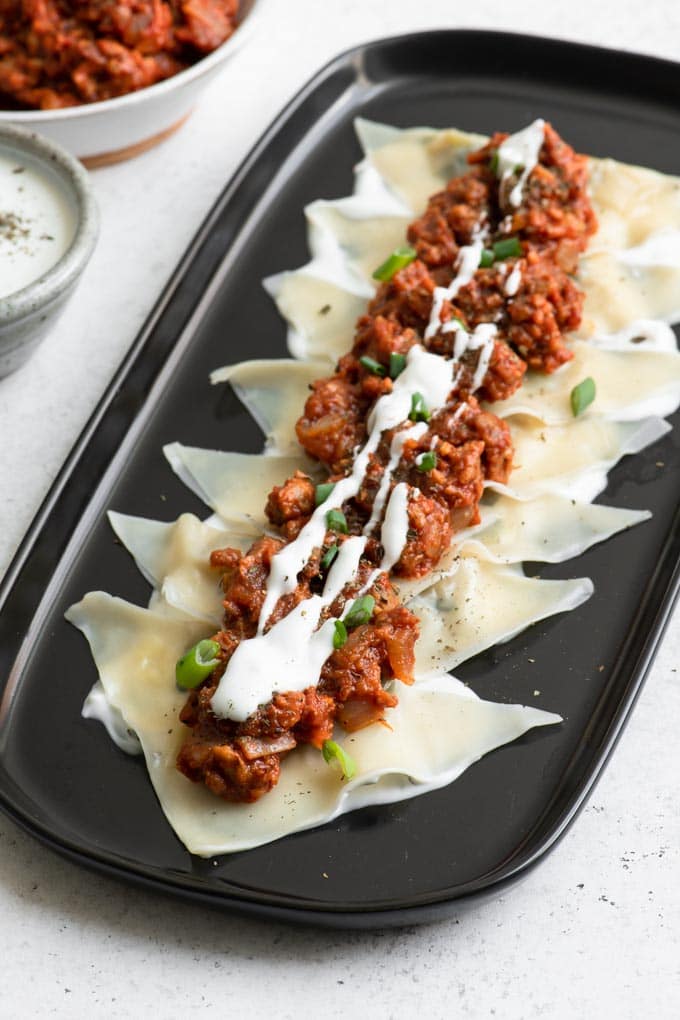 Hard
📜 Story
Hard
📜 Story
Ashak
Leek-Filled Dumplings
Special family dinners, Nowruz Medium
📜 Story
Medium
📜 Story
Aush
Afghan Noodle Soup
Winter meals, Nowruz, communal gatherings Easy
📜 Story
Easy
📜 Story
Bolani
Bolani
Ramadan iftar, Nowruz, snack or appetizer year-round
Comments (0)
Log in to leave a comment.
No comments yet. Be the first to share your thoughts!