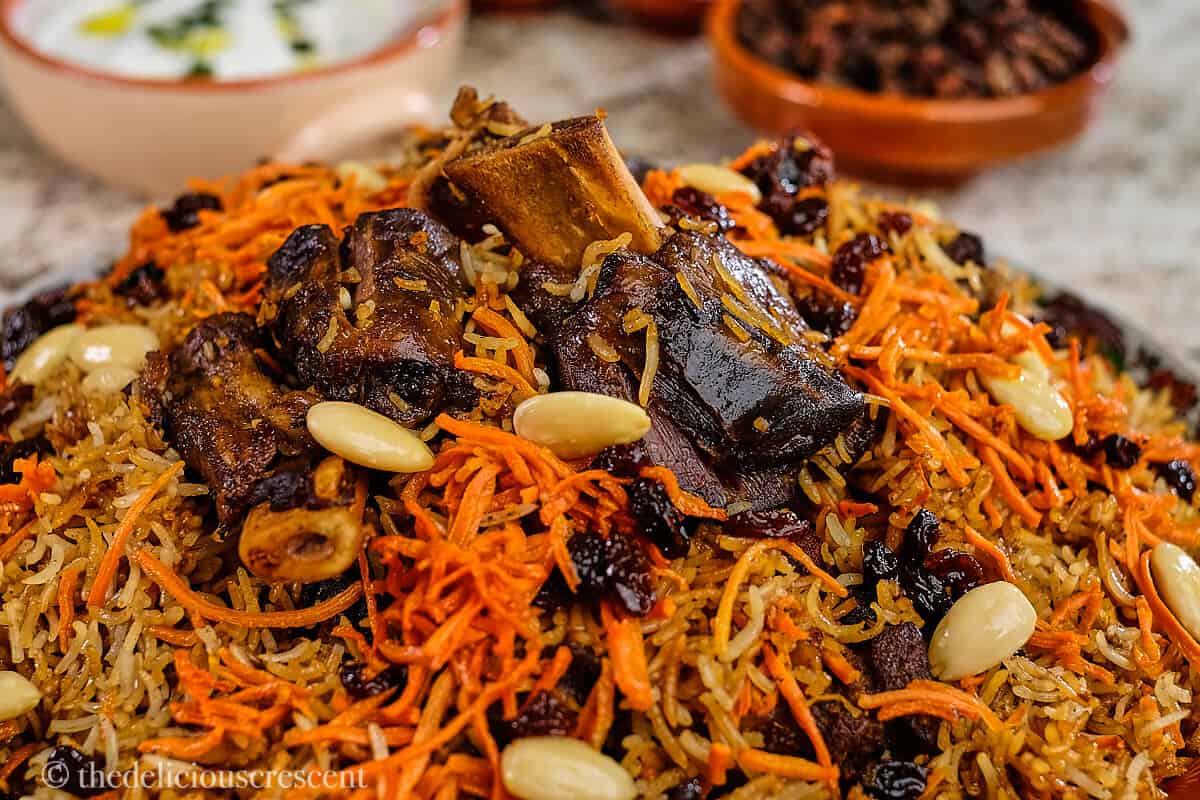
Afghanistan's national dish — long-grain rice studded with caramelized carrots, raisins, and almonds, cooked over tender lamb until every grain is infused with meat juices.
Nutrition & Info
Allergen Warnings
Equipment Needed
Presentation Guide
Vessel: large oval platter
Garnishes: julienned carrots, raisins, sliced almonds
Accompaniments: yogurt salad, fresh naan
Instructions
-
1
Soak the rinsed basmati rice in cold water for at least 30 minutes (or up to 2 hours for best results). This allows the grains to absorb moisture gradually, which ensures they cook up long, fluffy, and separate rather than sticky or broken. Drain completely and set aside before cooking.
-
2
Heat 2 tablespoons of oil in a large, heavy-bottomed pot or Dutch oven over medium-high heat until the oil shimmers. Add the sliced onions and cook for 10-12 minutes, stirring frequently, until they turn deep golden brown and caramelized. Remove half the onions and set aside for garnish. Add the lamb pieces to the remaining onions and sear on all sides for 5-7 minutes until well browned.
-
3
Add the ground cardamom, cumin, cinnamon, and black pepper to the pot and stir for 30 seconds until fragrant. Pour in 5 cups of water, season generously with salt, and bring to a boil. Reduce heat to low, cover, and simmer gently for 60-75 minutes until the lamb is fork-tender and the broth is richly flavored. Remove the lamb pieces and set aside, keeping them warm. Reserve the broth in the pot.
-
4
While the lamb simmers, prepare the carrot topping. Heat the remaining 2 tablespoons of oil in a separate skillet over medium heat. Add the julienned carrots and 2 tablespoons of sugar, stirring gently for 8-10 minutes until the carrots soften and caramelize to a deep golden-orange color. Add the raisins during the last 2 minutes to plump them. Set the carrot-raisin mixture aside.
-
5
Bring a large pot of generously salted water to a rolling boil. Add the drained, soaked rice and parboil for exactly 5 minutes — the grains should be softened on the outside but still firm and slightly chalky in the center. Drain immediately in a fine-mesh colander.
-
6
Measure 2 cups of the reserved lamb broth back into the heavy-bottomed pot. Arrange the lamb pieces in a single layer on the bottom. Gently mound the parboiled rice over the lamb, being careful not to disturb the meat. Using the handle of a wooden spoon, poke 5-6 deep holes through the rice to allow steam to circulate evenly.
-
7
Drizzle 2 tablespoons of the remaining broth over the rice. Cover the pot tightly with a lid wrapped in a clean kitchen towel to absorb excess moisture. Cook on the lowest possible heat for 30-35 minutes until the rice is fully cooked, each grain is separate and fluffy, and the bottom develops a light, golden crust (called tahdig).
-
8
To serve, mound the rice on a large oval platter, revealing the tender lamb pieces in the center. Crown the pilaf with the caramelized carrots, plumped raisins, toasted almonds or pistachios, and the reserved fried onions. The presentation should be dramatic and festive, befitting Afghanistan's national dish.
Did You Know?
Kabuli pulao gets its name from Kabul. The dish is so revered that it's served at every significant Afghan gathering from weddings to funerals.
Chef's Notes
Equipment Tips
- large heavy pot
- sharp knife
- cutting board
- wooden spoon
Garnishing
julienned carrots, raisins, sliced almonds
Accompaniments
yogurt salad, fresh naan
The Story Behind Kabuli Pulao
### The Story
Kabuli pulao (also qabili palaw) is the crown jewel of Afghan cuisine and the country's national dish -- a magnificent pilaf of basmati rice cooked with lamb, topped with caramelized carrots, raisins, and slivered almonds or pistachios. The dish takes its name from Kabul, the capital, though its roots lie in the broader Persian-Central Asian pilaf tradition that stretches back over a thousand years. The technique of par-cooking rice, then layering it over meat and finishing in a sealed pot (dum method) arrived via Persian court cuisine, while the distinctive carrot-and-raisin topping reflects the Afghan love of combining sweet and savory. Historical accounts from the Timurid period (15th century) describe elaborate pilafs in the courts of Herat that are direct ancestors of today's kabuli pulao.
### On the Calendar
Kabuli pulao is the obligatory dish at Afghan weddings, Eid celebrations, and important family gatherings. It is the food of melmastia (hospitality) -- preparing kabuli pulao for guests is the highest expression of Afghan welcome. It is also common at Friday family lunches.
### Then & Now
The rice must be long-grained and aromatic, each grain separate and infused with the meat broth's flavor. The lamb (traditionally from the fat-tailed sheep prized across Central Asia) is braised until tender, and its cooking liquid becomes the rice-cooking medium. The carrot strips are fried with sugar until caramelized and golden, and the raisins are plumped in oil. These are layered over the cooked rice in a sunburst pattern, balancing the sweetness of carrots and raisins against the savory depth of lamb and rice, with cardamom and cumin providing aromatic warmth.
### Legacy
Kabuli pulao is the essence of Afghan culinary identity -- a dish combining Persian refinement, Central Asian heartiness, and Afghan generosity in every fragrant, jeweled mound of rice.
More Afghan Dishes
 Easy
📜 Story
Easy
📜 Story
Afghan Salata
Afghan Fresh Salad
Every meal, always on the table Hard
📜 Story
Hard
📜 Story
Ashak
Leek-Filled Dumplings
Special family dinners, Nowruz Medium
📜 Story
Medium
📜 Story
Aush
Afghan Noodle Soup
Winter meals, Nowruz, communal gatherings Easy
📜 Story
Easy
📜 Story
Bolani
Bolani
Ramadan iftar, Nowruz, snack or appetizer year-round
Comments (0)
Log in to leave a comment.
No comments yet. Be the first to share your thoughts!